Sugar Beet Segmentation
Project2024In my final semester at CU Boulder, I took Deep Learning and Neural Networks (CSCI 5922), a graduate-level class covering state-of-the-art deep learning techniques and research. As part of this class, we were required to propose and develop an original deep learning research project on a topic that interested us.
Because of our shared interest in agricultural robotics, my partner and I chose to enter the PhenoBench Competition, aimed at improving semantic segmentation (and other tasks) on sugar beet fields. We aimed to improve on the existing submissions by training two different models.
 |
|---|
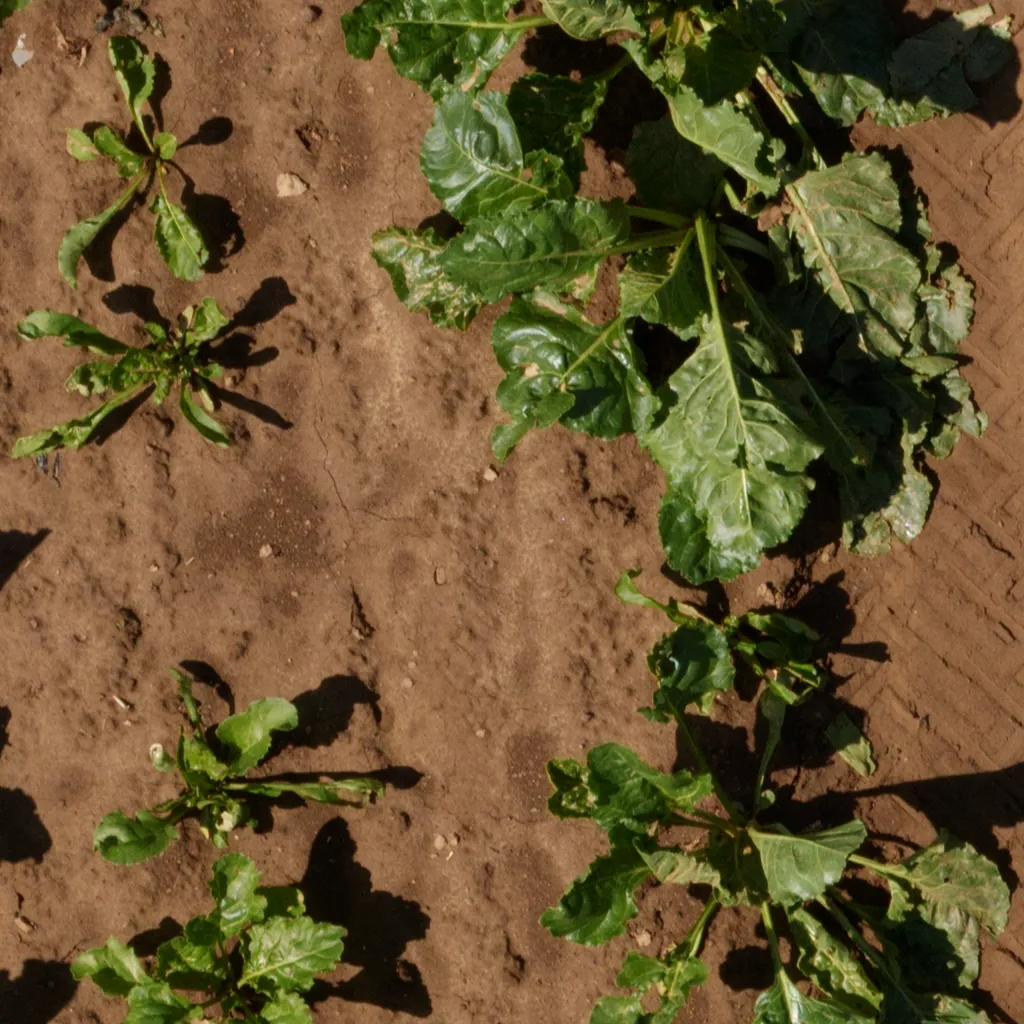
| An example frame from the PhenoBench competition. Our aim was to classify each pixel as soil, crop, or weed |
We based our models on a vanilla UNET architecture, and used this architecture as a control to determine whether our modifications made improvements.
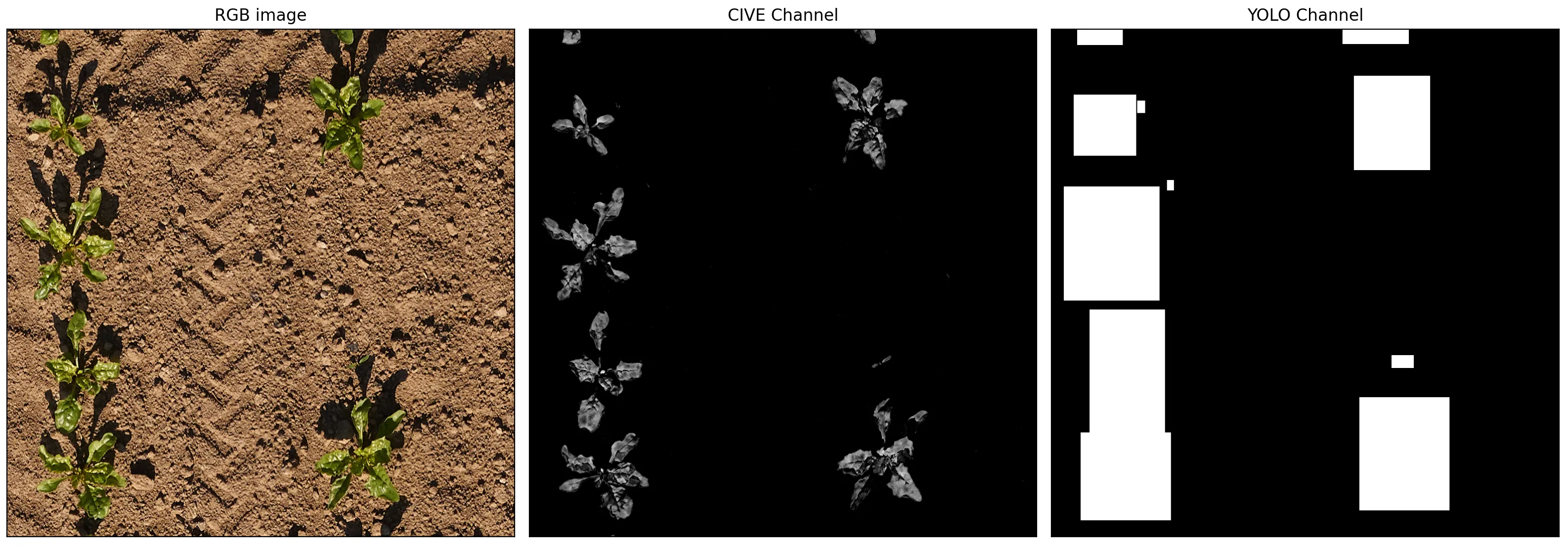
Our first model took a feature engineering approach, by adding two additional channels to the original RGB image before feeding it into the UNET. The first channel was a CIVE (color index of vegetation extraction) image, a common way of detecting vegetation in remote sensing applications. The second channel was a bounding-box mask output by YOLO, a popular object detection network. The idea behind this approach was that it could focus the network’s efforts early on regions deemed likely to be vegetation.
 |
|---|
| The RGB Image, CIVE Channel, and YOLO Channel fed into the UNET in our first model |
Our second model integrated Convolutional Block Attention Modules (CBAM), which is a module that leverages channel and spatial attention to inform the model of the importance of the output channels. These modules were integrated after max-pooling steps and before up-convolution steps.
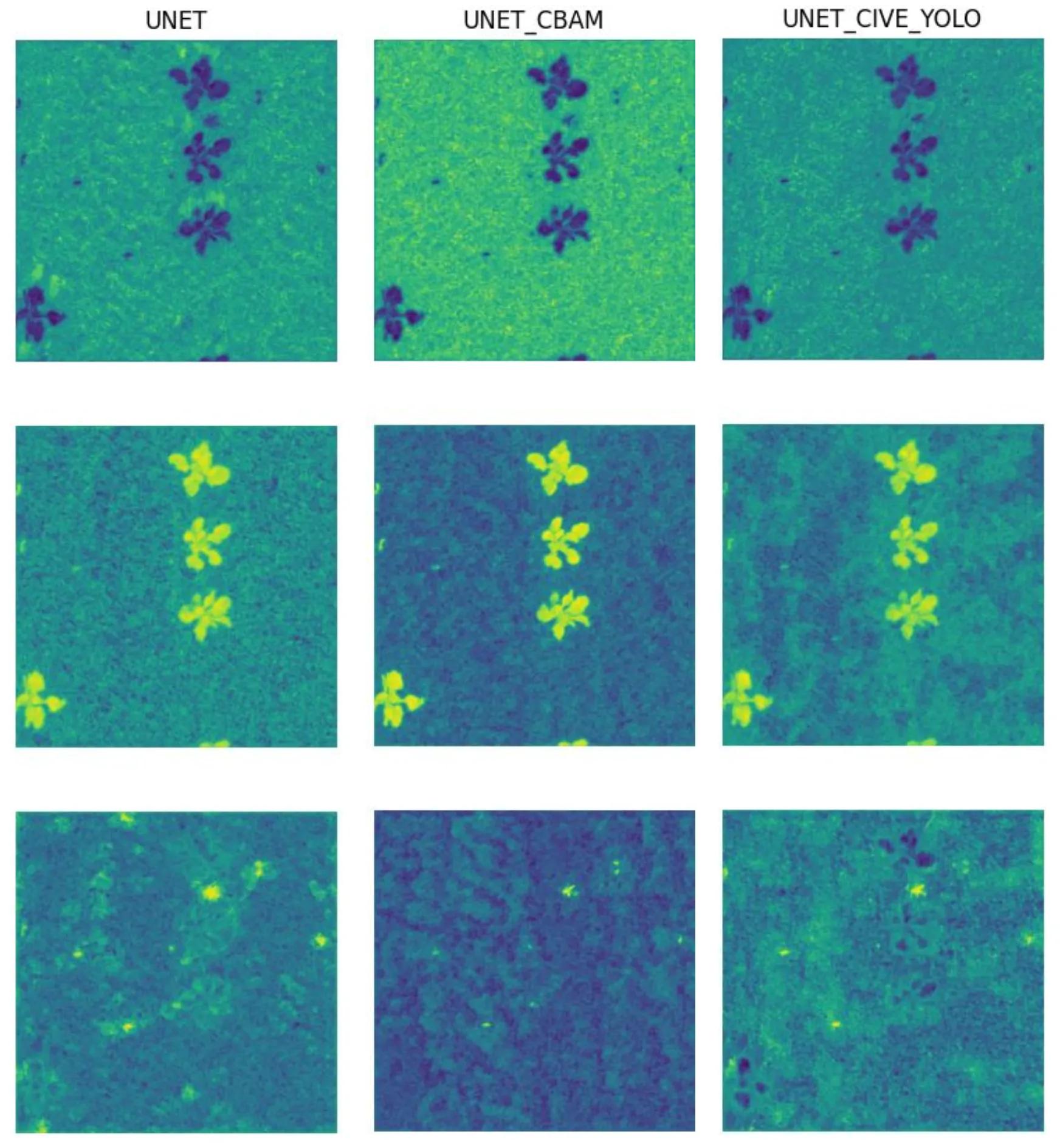
We found that the feature engineering approach led to a small improvement in weed detection, but that the CBAM approach led to a significant improvement in weed detection and overall mIoU. We submitted the results to the PhenoBench competition. For more details, please see the report linked above.
 |
|---|
| Activation maps for each model for soil, crops, and weeds, respectively |
This project was a nice introduction to deep learning, and I learned a lot about conducting a research project and how to work on an intensive software project with a partner. It also served to deepen my interest in agricultural robotics!